1940 Act funds provide many investor benefits, such as transparency and professional management, allowing for the convergence of public and private markets. There is a certain level of risk mitigation for the retail investor that isn’t available through other investment vehicles. Additionally, most of these funds allow for tax benefits that mimic the results of private fund investors and could potentially provide even better outcomes, specifically when it comes to tax reporting.
Shareholder Reporting: Form 1099 vs. Schedule K-1
Traditionally, investors have gained exposure to alternative assets through private funds taxed as partnerships for U.S. tax purposes. At year-end, the partner (investor) would receive a Schedule K-1 representing their share of the partnership’s income to report on their personal tax return. However, K-1s tend to be delivered late in the year, delaying individual tax compliance and potentially delivering unexpected income that may increase tax liability with little time for planning. Additional tax complexities associated with K-1s include exposure to state tax filings and other items that can overcomplicate individual tax compliance.
RICs are appealing because they are corporations for U.S. tax purposes, and shareholders receive Form 1099 in January or February, instead of waiting for a K-1, which could be delivered as late as September. Form 1099 also tends to be easier to interpret than a multipage K-1 with detailed footnotes. In addition, Form 1099 merely reports the tax classification of cash received by the investor during the year. The K-1 has the potential to report “phantom income,” where taxable income reported on a K-1 is in excess of cash received by the investor during the year.
Fund Taxation: RICs Can Avoid Paying Income Tax
Partnership vs. Corporation: One of the reasons partnerships are a popular product for alternative asset investments is because they are not subject to double taxation. A partnership is a pass-through entity that passes income to its partners without paying tax at the partnership level. Tax is paid by the investor, resulting in a single layer of tax.
A corporation, however, is subject to tax on its income at the federal rate of 21% plus state taxation. Corporate income is distributed as a dividend to the shareholder (investor) and taxed again on the shareholder’s personal return. This double taxation result is an undesirable hit to the investor’s return. Traditionally, corporations are not used as investment vehicles, in favor of partnerships, because of the double taxation.
Corporation vs. RIC: RICs are a type of corporation allowed to take a special deduction, the Dividends Paid Deduction (DPD). The DPD allows RICs to take a deduction for distributions it pays to its investors. Therefore, if substantially all a RIC’s taxable income is distributed, the fund does not pay tax at the fund level. The following chart illustrates the DPD difference between a traditional corporation and a RIC.
Corporation vs. RIC: Tax Comparison
| Investment Company Income | $10,000 | |
|---|---|---|
| Corporation | RIC | |
| Taxable Income Before Dividends Paid Deduction | $10,000 | $10,000 |
| Dividends Paid Deduction | n/a | ($10,000) |
| Taxable Income | $10,000 | 0 |
| Corporate Income Tax (21% rate) | $2,100 | 0 |
| Dividend Income | $7,900 | $10,000 |
| Shareholder Tax (assuming a 37% rate) | $2,923 | $3,700 |
| Total Taxes | $5,023 | $3,700 |
| Cost of Not Qualifying as a RIC | $1,323 | n/a |
Private to Public: Is Tax-Free Conversion an Option?
Registered funds with private investments often convert from a private fund, typically a partnership, to a RIC. This allows funds to build up their portfolio and gain initial capital as a private fund without having to navigate RIC qualifications. Once the portfolio reaches its desired size and composition, the fund could undergo a tax-free conversion — often a Section 351 reorganization — into the RIC wrapper. Generally, assets are brought over at historical cost, and no gain is recognized. The fund must be diversified and is subject to more rules and limitations to achieve tax-free status.
There is a need for considerable planning between all parties involved (adviser, custodian, legal counsel, auditor, administrator, etc.) to coordinate the conversion. While not a straightforward process, launching a private fund and converting tax-free to a RIC provides a significant tax benefit for funds and investors with alternative assets, and can be worth the hassle of navigating the requirements.
Accessing Private Markets Through Public Vehicles
Registered funds are generally taxed as RICs but could be different types of products. Most funds on the market that provide exposure to private assets are closed-end funds, such as interval funds, tender offer funds and BDCs. These semi-liquid structures have a combination of the characteristics of public funds and private funds. They provide access to less liquid investments while still allowing for a certain level of liquidity to investors. Investors also benefit from regulatory oversight and professionally managed alternative exposure, which might be unavailable with mutual funds and exchange-traded funds (ETFs).
It is worth noting BDCs are slightly different than other closed-end funds. While this paper points to some differences where relevant, the focus is not on BDCs. The focus is on taxation of private assets in RICs, which mostly follows the same tax rules for interval funds, tender offer funds and BDCs. The tax considerations for alternative assets are the same for mutual funds and ETFs as well, since all these funds are taxed as RICs; however, open-end funds are not often used to bring private market exposure to retail investors.
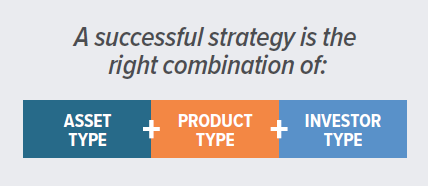
As the industry continues to innovate, there will likely be more deviation from standard investment vehicles. When assessing the best fund options, it is relevant to consider asset type, public vehicle wrapper and investor type in the aggregate.
Contact Us
Our team works with approximately one-third of the interval and tender offer fund market across diverse asset classes, including private investments, REITs, derivatives and direct real estate. What sets us apart is our ability to simplify the complex. Working with some of the most innovative investment managers, our team — 100% dedicated to the investment industry — offers in-depth insights on industry trends, direct experience and a holistic perspective.


Thank you to Brett Eichenberger, Stephen Fisher, Jay Laurila, Eric Lemmon, Erin McClafferty, Rob Meiner, Andreana Shengelya and Claire Toraason for contributing to this publication.